
object-detection
5 posts · browse all tags
 Models & Detection
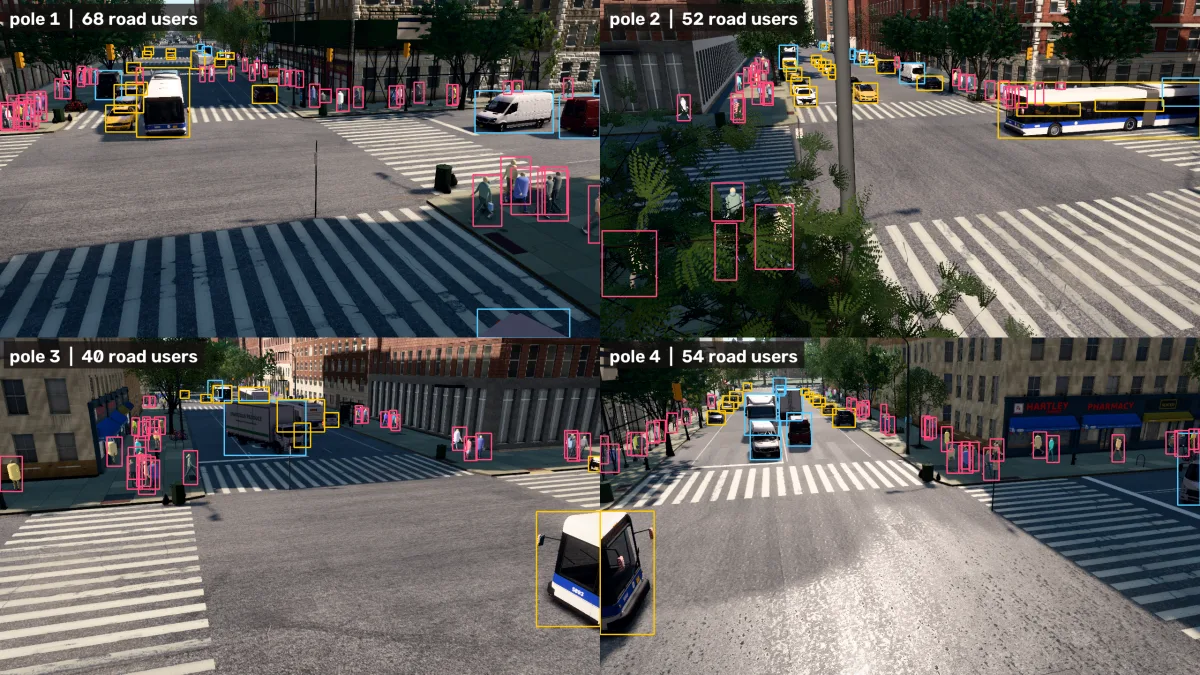
A Traffic Camera in a Simulated New York: Exact Labels at 0.75 s a Frame
A pole camera at a real Harlem junction, rendered by the Valdrada simulator on one desktop GPU: every car and pedestrian comes with its box, its mask, its depth and how much of it is hidden, at 0.75 s per labelled frame when four cameras share a capture. What it took to run headless on Linux, what a simulated label does and does not tell you, how far a COCO detector gets on it, and a recording format that lets the same code read a real camera later.
 Edge Deployment
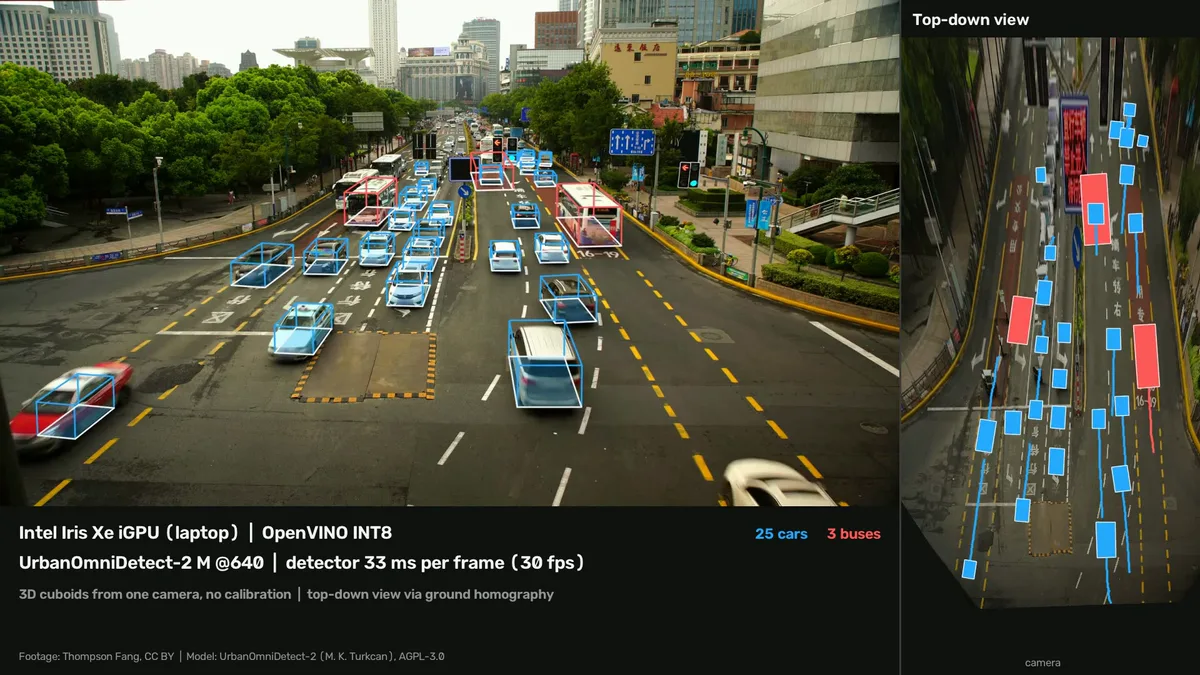
3D Vehicle Detection on a Laptop iGPU
UrbanOmniDetect-2 draws a 3D box around every vehicle from one uncalibrated camera and places it on a top-down map of the road. On the Intel Iris Xe inside a 12th-gen laptop, quantized to INT8 with OpenVINO and with its final layer kept in float, the medium model runs at 33 ms per frame (30 fps), and its box corners stay within 0.4 px of the original model on two traffic cameras.
 Models & Detection
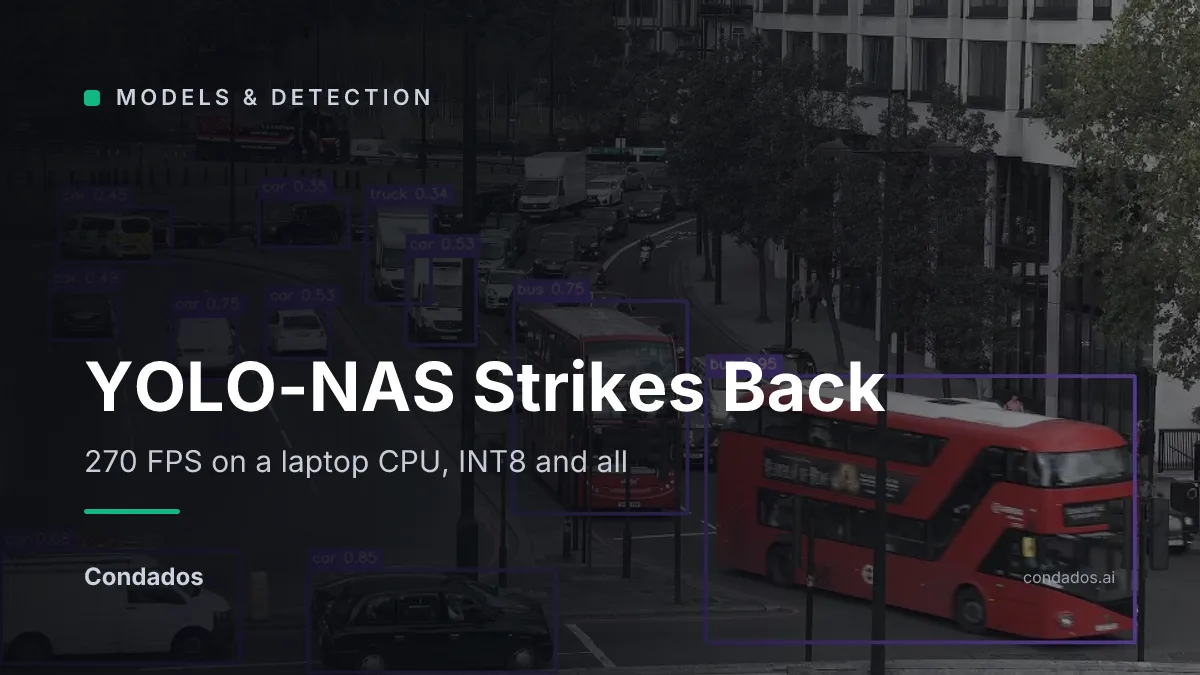
YOLO-NAS Strikes Back: Still the Fastest Detector on Hardware You Already Own
Quantized to INT8, YOLO-NAS-S runs at 201 FPS on a laptop CPU and gives up 0.4 AP on COCO for it, and it drops straight into Frigate. The model aged well; its tooling did not. Here is a clean reimplementation, measured across CPU, Intel iGPU and NVIDIA dGPU, and checked bit-for-bit against the original.
 Evaluation
Object Detection Metrics: IoU, AP, and the mAP Everyone Quotes
How detection is scored: IoU to decide a hit, greedy matching into TP/FP/FN, per-class Average Precision as the area under the precision–recall curve, and the COCO mAP@[.5:.95] you see in every paper, all on one running parking-lot example, with torchmetrics.
 Edge Deployment
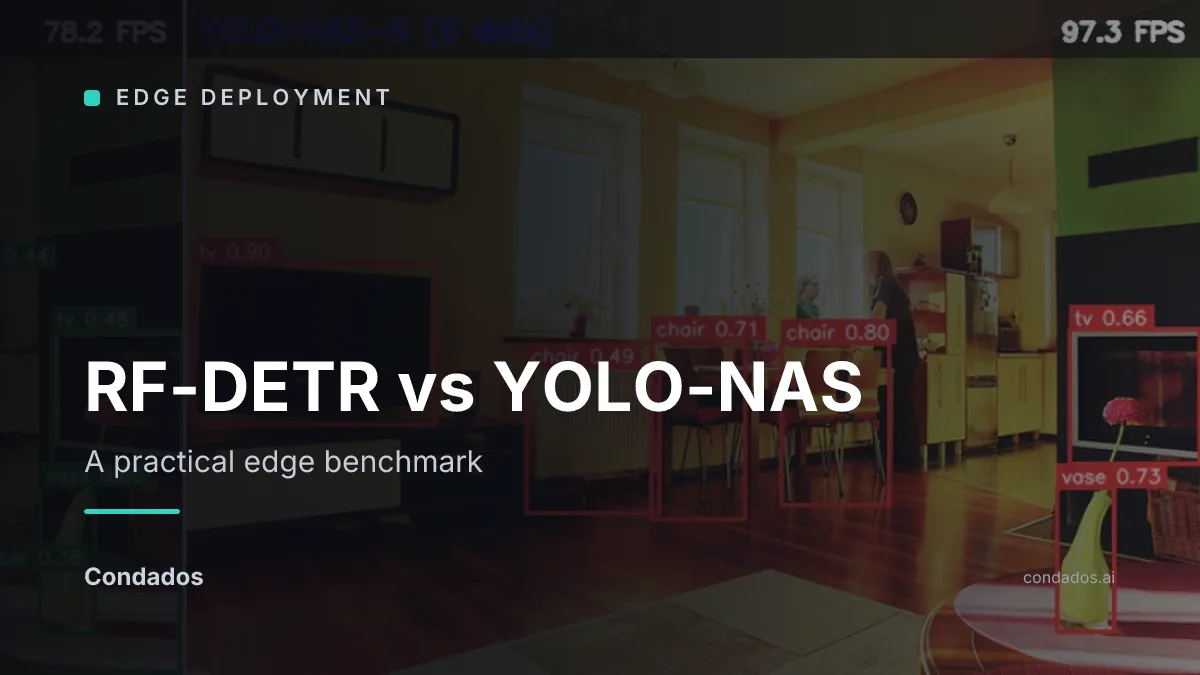
RF-DETR vs YOLO-NAS: A Practical Benchmark for Edge Deployment: CPU, GPU, and Intel iGPU Compared
RF-DETR Nano vs YOLO-NAS-S on COCO across CPU, CUDA GPU, and Intel Iris Xe iGPU, across two resolutions, OpenVINO FP32/FP16/INT8, and a custom fine-tune, all under one consistent evaluation. RF-DETR wins accuracy; YOLO-NAS wins latency, efficiency, and INT8.